

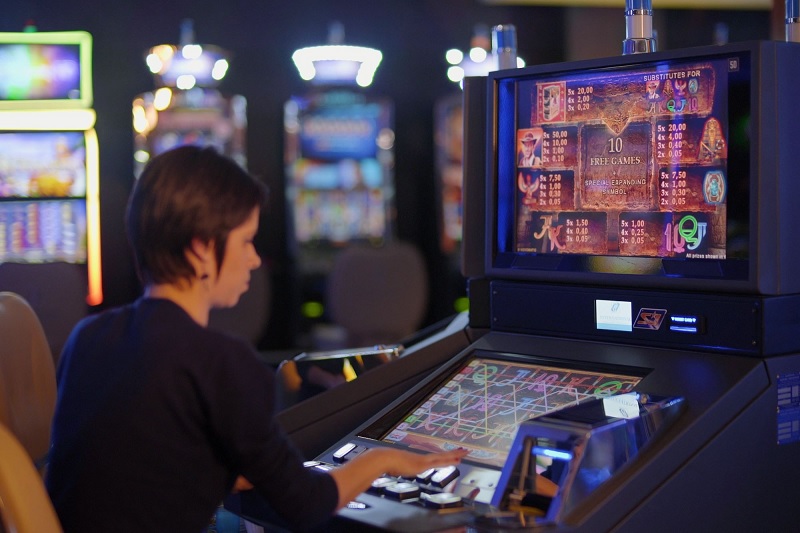
Walking onto a bustling casino floor or logging into a digital gaming platform immediately subjects a player to a carefully orchestrated symphony of sights and sounds. Amidst the flashing lights and spinning reels, the ultimate draw for the vast majority of slot enthusiasts is the promise of the jackpot. It is the defining feature that transforms a simple game of chance into an opportunity for a massive financial windfall. However, not all jackpots are engineered the same way.
The slot machine ecosystem is broadly divided into two primary categories: fixed jackpots and progressive jackpots. While both offer the thrill of a major payout, the underlying mathematics, betting requirements, and overall player experience are radically different. Understanding the mechanical distinctions between these two formats is essential for any player looking to optimize their bankroll, manage their expectations, and choose the game that best aligns with their personal risk tolerance.
The Mechanics of Fixed Jackpot Slots
Fixed jackpot slots, frequently referred to in the industry as flat-top machines, represent the traditional foundation of casino gaming. The defining characteristic of these games is absolute stability. The maximum prize available on a fixed jackpot machine is hardcoded into the software and never fluctuates, regardless of how many people play the game, how much money is wagered, or how much time has passed since the last grand prize was awarded.
Predictability and the Multiplier Effect
The payout structure of a fixed jackpot is entirely transparent and acts as a static multiplier of your wager. If you sit down at a machine where the top prize is five thousand coins, that prize remains five thousand coins permanently. The actual cash value of that jackpot scales directly with your chosen denomination. If you are playing for one dollar per spin, hitting the top combination yields a five-thousand-dollar payout. If you increase your bet to ten dollars per spin, that exact same combination yields fifty thousand dollars.
This predictability is incredibly appealing to strategic players who want to know exactly what they are aiming for before they commit their bankroll. There is no guessing game involved; the paytable explicitly outlines the maximum potential return on investment.
Hit Frequency and Base Game Volatility
Because the casino does not have to fund an ever-expanding, multi-million-dollar prize pool, fixed jackpot games generally offer a much more forgiving gameplay experience. These machines typically feature a higher hit frequency, meaning winning combinations land on the reels more often. While the majority of these wins will be small, incremental payouts, they serve a vital purpose: they sustain your bankroll.
Furthermore, fixed jackpot games often possess lower overall volatility. You are less likely to endure massive, prolonged losing streaks compared to the volatile swings of a progressive machine. For players who visit a casino with the primary goal of extending their entertainment time and enjoying a longer session without rapidly depleting their funds, the mathematical stability of a flat-top machine provides a vastly superior experience.
The Mechanics of Progressive Jackpot Slots
If fixed jackpots are the reliable workhorses of the casino floor, progressive jackpots are the lottery tickets. The allure of the progressive game lies in its limitless potential. Instead of a static top prize, the jackpot is a dynamic, continuously growing pool of money that increases every single time a player spins the reels without hitting the winning combination.
The Accumulation Engine
The growth of a progressive jackpot is fueled by a built-in mathematical tax on every wager. A specific percentage of every bet placed on the machine—usually ranging from one to five percent—is automatically siphoned off and added to the jackpot meter. The moment a lucky player hits the precise combination of symbols to trigger the grand prize, the winner claims the entire accumulated pool. The machine then instantly resets to a predetermined baseline amount, known as the seed value, and the accumulation process begins all over again.
Standalone, Local, and Wide-Area Networks
The speed at which a progressive jackpot grows, and the ultimate size it reaches, depends entirely on how the machines are networked together.
A standalone progressive is an isolated machine. The jackpot only grows when someone is actively playing that specific physical cabinet. These prizes tend to be relatively modest, often capping out in the low thousands.
A local-area progressive links multiple machines together within a single casino property. A bank of ten or twenty slot machines will all feed into the exact same overhead jackpot meter. These prizes grow faster and generally reach the tens of thousands of dollars.
The true giants of the industry are the wide-area network (WAN) progressives. These systems link thousands of individual machines across an entire state, or across multiple digital casino platforms, pooling fractions of a cent from tens of thousands of players simultaneously. Games operating on a wide-area network are responsible for the life-changing, multi-million-dollar headlines that occasionally sweep the news. However, because you are competing against every other player on the network, the mathematical odds of hitting a WAN progressive are astronomical, often mirroring the odds of winning a national lottery.
The Mathematical Reality: RTP and the Hidden Cost
To truly grasp the difference between these two formats, a player must look beneath the flashing jackpot meter and understand how the prizes impact the machine’s overall payout percentage. Every slot machine is programmed with a theoretical Return to Player (RTP) rate, which dictates the percentage of wagered money the machine will pay back over an infinite timeline.
A fixed jackpot slot might have an RTP of ninety-five percent, meaning that, in theory, the machine returns ninety-five dollars for every one hundred dollars wagered. Almost all of this RTP is concentrated in the base game, resulting in those frequent, smaller wins that keep you playing.
Progressive slots also have an RTP, but it is split into two distinct categories: the base game RTP and the jackpot contribution RTP. If a progressive machine boasts a ninety percent total RTP, a significant portion of that—perhaps five or six percent—is locked away in the jackpot pool. This means the base game you are actively playing is only operating on an eighty-four or eighty-five percent RTP.
This hidden cost is why progressive slot machines frequently feel “tight” or unforgiving. The machine has to withhold money from the everyday players to fund the massive prize at the top. You will experience longer dry spells, fewer bonus features, and faster bankroll depletion because the math requires it to build the jackpot.
Betting Requirements and Bankroll Management
One of the most critical, yet frequently overlooked, differences between these two types of games revolves around minimum betting requirements.
On a fixed jackpot machine, your bet size dictates your payout proportionally, but you are generally eligible to win the top prize regardless of whether you bet one coin or five coins. It makes bankroll management highly flexible, accommodating both low rollers and high-stakes players alike.
Progressive jackpots operate under a much stricter set of rules. On the vast majority of progressive machines, you must place the maximum bet to even qualify for the jackpot pool. If you play a progressive machine and only wager one credit instead of the required three or five, and you manage to line up the jackpot symbols, you will not win the millions displayed on the glowing meter. Instead, you will be awarded a flat, severely reduced consolation prize.
Playing a progressive slot without betting the maximum amount is mathematically the worst wager you can make in a casino. You are actively contributing a percentage of your bet to a jackpot pool that you are legally disqualified from winning. Therefore, progressive games demand a significantly larger session bankroll to survive the high minimum bets and the inherently high volatility.
Aligning Game Choice with Player Strategy
Choosing between a progressive and a fixed jackpot slot should never be a random decision based on the theme of the cabinet. It requires a strategic assessment of your goals for that specific gaming session.
If your objective is to stretch your entertainment budget, enjoy frequent payouts, and experience the bonus rounds built into modern slot software, fixed jackpot games are the mathematically superior choice. They offer a stable, predictable environment where a standard bankroll can provide hours of engaging gameplay.
Conversely, if you are willing to accept a high degree of risk and are playing with discretionary funds that you are fully prepared to lose, progressive jackpots offer an unmatched level of adrenaline. You are essentially paying a premium for the right to dream. The baseline gameplay will be harsh, and your funds may disappear quickly, but the remote possibility of hitting a life-altering sum of money provides a psychological thrill that flat-top machines simply cannot replicate.
Ultimately, the slot floor is an exercise in risk management. By looking past the flashing lights and understanding the mechanical engines driving these games, players can make informed, calculated decisions that protect their bankrolls and maximize the specific type of entertainment they are seeking.

Comments are closed.