

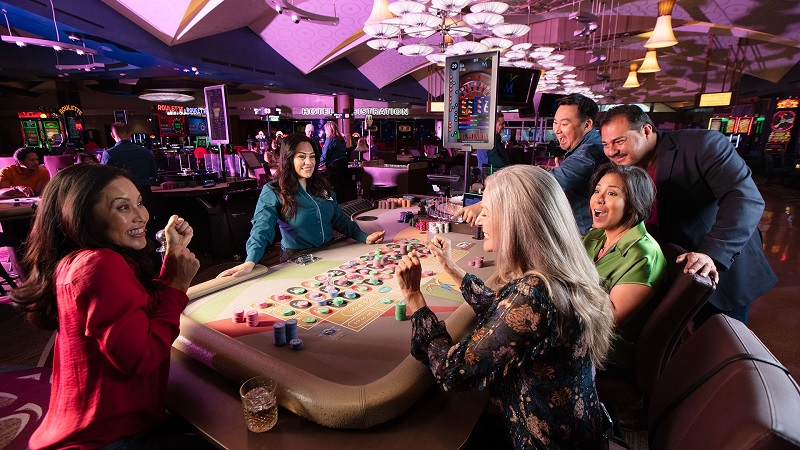
Walking onto a traditional casino floor is a carefully engineered assault on the senses. The flashing lights of the slot cabinets, the rhythmic clatter of clay chips, the complete absence of windows, and the constant hum of manufactured excitement are all designed to pull you out of reality. For decades, this sensory immersion was the only way to experience a wager. Today, the entire gambling ecosystem has been compressed into a glass screen in your pocket.
While both physical and digital casinos offer the exact same foundational games—blackjack, roulette, baccarat, and slot machines—the actual experience of playing them could not be more distinct. Understanding the mechanical, financial, and psychological differences between traditional brick-and-mortar establishments and online betting platforms is essential for managing your bankroll and setting realistic expectations for your entertainment.
The Speed of Play and Bankroll Exposure
The most mathematically significant difference between a physical casino and a digital betting app is the sheer velocity of the game. In a traditional setting, the pace is heavily dictated by human physics and social friction. A dealer has to physically shuffle multiple decks of cards, distribute them across the felt, wait for novice players to calculate their hand totals, collect losing bets, and painstakingly pay out winning chips. A full blackjack table on a busy Saturday night might yield fifty or sixty hands per hour.
Online, those physical frictions are entirely eliminated. Software algorithms and random number generators dictate the outcome instantly. Bets are collected and paid out in milliseconds. When playing blackjack or video poker alone on an app, it is incredibly easy to play two hundred hands in a single hour.
This increased speed directly amplifies your exposure to variance. Because you are playing three or four times faster, the mathematical house edge grinds against your bankroll at a much higher rate. A player who brings two hundred dollars to a physical table might comfortably play for three or four hours while chatting with the dealer. That same bankroll, played at the same base wager on a mobile app, could vanish in twenty minutes if the cards run cold.
The Psychology of the Environment
Traditional casinos are masterclasses in environmental psychology. Every square inch of the gaming floor is optimized to keep you seated, engaged, and betting. Complimentary cocktails intentionally lower your inhibitions, while the maze-like floor plans make finding the exit difficult by design. It is a highly social environment, fueled by the collective energy of a hot craps table or the shared groan of the dealer drawing a miracle twenty-one.
Online platforms strip away this communal atmosphere, replacing it with pure, isolated efficiency. You control the environment entirely. There are no intoxicated players spilling drinks on the felt, no second-hand smoke, and no agonizing waits for an open seat at your favorite table. However, this isolation carries its own psychological risks. Without the natural stopping points provided by a physical environment—such as needing to drive home, walking to a steakhouse for dinner, or feeling physically tired from standing at a table—it requires immense personal discipline to log off and walk away from a digital session.
Table Minimums and Overhead Costs
Operating a massive physical resort costs hundreds of millions of dollars. Brick-and-mortar casinos must pay for electricity, security details, cocktail waitresses, dealers, pit bosses, and constant building maintenance. To offset this massive overhead, they must extract a high amount of revenue per square foot of gaming space. This economic reality is directly reflected in table minimums. Finding a five-dollar blackjack or roulette table on the Las Vegas Strip is nearly impossible today; players are routinely forced into fifteen, twenty-five, or fifty-dollar minimum bets just to secure a chair.
Online operators face a fraction of these physical overhead costs. A digital server can host ten thousand players simultaneously without hiring a single extra dealer or pouring a single free drink. Because their marginal cost per player is essentially zero, online casinos can offer micro-stakes. You can play slot machines for single pennies and find table games that allow wagers of a single dollar. This drastically democratizes the game, allowing players with smaller entertainment budgets to practice their strategies without risking hundreds of dollars in a single session.
Financial Logistics: Cash, Chips, and Digital Wallets
Handling money in a physical casino involves a tactile process that naturally slows down your spending. You have to walk to an ATM, pull out physical bills, carry them to a table, and watch the dealer exchange your cash for clay chips. While casino chips are deliberately designed to make money feel like a toy, they still possess a physical weight. When your stack dwindles, you physically feel the loss. Furthermore, winning at a live venue requires tipping the dealers and waitstaff, which silently eats into your overall profit margins.
Digital gambling replaces this tactile experience with frictionless digital wallets. Depositing funds takes a single tap on a touchscreen. While this is incredibly convenient, it removes the psychological weight of spending real money. Pressing a button to deposit five hundred dollars feels identical to depositing five dollars.
The friction of cashing out is also inverted. A physical casino pays you cash instantly at the cashier’s cage. Online casinos, restricted by banking regulations, often force you to wait anywhere from twenty-four hours to several business days to process a withdrawal transfer to your checking account.
Player Rewards and the Reality of Casino Bonuses
Both industries rely heavily on rewarding player loyalty to retain business, but their methodologies are entirely different. Traditional casinos operate on a hospitality model. They issue player cards to track your theoretical loss over time, rewarding you with complimentary hotel rooms, fine dining credits, spa vouchers, and tickets to resident shows. These perks enhance the overall vacation experience but rarely put direct cash back into your pocket to wager.
Online platforms cannot offer you a free hotel suite, so they compete using purely financial incentives. They offer massive deposit matches, risk-free bets, and free spins. At first glance, receiving a thousand dollars in bonus funds seems vastly superior to a free room. However, digital bonuses are always tethered to strict playthrough requirements. If an online casino gives you a hundred-dollar bonus with a twenty-time rollover requirement, you must place two thousand dollars in wagers before that bonus money officially converts into withdrawable cash. Players must meticulously read the terms and conditions online, whereas a physical hotel room has virtually zero hidden mathematical strings attached.
Floor Space Versus Infinite Digital Lobbies
A physical casino is ultimately limited by its concrete square footage. Floor managers dedicate the vast majority of their space to the highest-earning assets, which are typically modern, branded slot machines. If you want to play a niche table game or a specific, high-payout variation of video poker, you might have to walk miles between different resorts just to find a single available machine.
The digital lobby faces no such physical constraints. An online casino can host thousands of unique slot variants alongside obscure table games that would never justify the floor space in a physical venue. The modern integration of live dealer studios—where real human dealers are broadcast via high-definition webcam to your device—effectively bridges the gap. This allows online players to experience the visual trust of real cards and real roulette wheels without sacrificing the massive, instantaneous variety of the digital ecosystem.
Deciding between a trip to a physical casino and logging onto a digital platform ultimately comes down to what you want to extract from the experience. If you view gambling as an immersive social event, an excuse to travel, and an opportunity to enjoy high-end hospitality, the traditional casino remains unmatched. However, if you are focused strictly on the mathematics of the games, require total control over your environment, and prefer the flexibility of lower minimum bets, the online ecosystem offers a far superior, frictionless experience.

Comments are closed.